 |
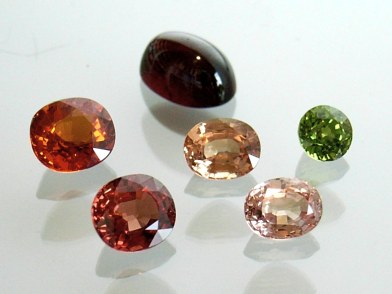
| 様々なアフリカのガーネット 0.78-4.19ct (Garnets from various African localities) |
新着宝石展示室
(New Gemstone Gallery)
2010 May : アフリカのガーネット(African Garnets)
|
| 様々なアフリカのガーネット 0.78-4.19ct (Garnets from various African localities) |
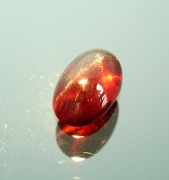
ケニアのスター・ガーネット(Star Garnet from Kenya)
キャッツ・アイやスター等のサイモフェーン効果は多くの宝石に見られますが、本来他の鉱物の繊維状の結晶や水泡、気泡等に因るものですから大半は不透明で不鮮明な色合いになってしまいます。
稀に美しいものだけが宝石として珍重されます。
柘榴石は等軸晶系の結晶系に因る主に十字のスターやキャッツ・アイ効果が起こりますが、美しいものは皆無といって良く殆どは暗い色合いです。
強い光を当ててようやくうっすらとスターが現れる例が大半ですから、標本としての価値しかありません。
写真の暗赤色の石は1.746の屈折率からパイロープと判明しました。
Cymophane effects, such as star and cats-eye are commonly seen in most of colored stones. But in general, they are opaque to translucent and have dull color due to inclusions of fibrous crystals and liquid and gas bubbles. There are cross-star or cat's-eye garnets but almost all of them are too dark and stars are seen only under strong illumination. This star garnet is pyrope with R.I. of 1.746.Pyrope star garnet 4.19ct 10.4x7.0x5.3mm
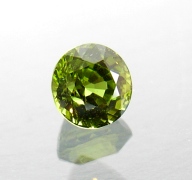
マリのグランダイト・ガーネット(Grandite Garnet from Mali)
1990年代半ばにマリ南西部の砂漠地帯で再発見されたガーネットは主にグロシュラーとアンドラダイトから成る新しい種類のガーネットとして注目を集め、マリ・ガーネット或いはグランダイト・ガーネットの呼称が定着しています。
大半は淡緑ー淡黄ー褐色ですが、稀にウヴァロヴァイト成分を2%ほど含みツァヴォライトやデマントイドのような深い緑のものがあります。
写真の石は小さな石ですが、グランダイト特有の強い煌きと濃い緑の色合いで存在感があります。
チェルシー・フィルターを通して見るとピンクに変わり、確かにウヴァロヴァイト成分が含まれています。
屈折率は1.773とグロシュラーとアンドラダイトの中間を示します。
A new type of gem garnet, re-discovered in mid 1990s in the desert of south-western Mali. is now called Grossular-Andradite, or Grandite garnet. Most are pale-green to pale yellow to brown but rarely deep green color one like tsavorite or demantoid with minor uvarovite component are found, like the stone on the photo.
This stone turns pale pink under chelsea filtor to prove chromium contens. R.I. is 1.773.0.78ct 5.1x5.0x4.1mm
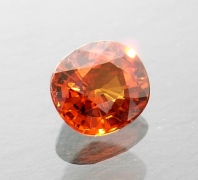
ナミビアのスペッサータイン(Spessartine from Namibia)
1990年代半ばにナミビアの北西端、ナミブ砂漠のアンゴラ国境に近いクネーネ川流域の変成マンガン鉱床地帯から純度の高いオレンジ色のマンダリンと呼ばれるスペッサータインが発見されました。
1990年代末には産出が途絶えました。が、以後続々とアフリカ各地から発見された純度の高い橙色のスペッサータインが一般的にマンダリン・ガーネットと呼ばれるようになりました。
写真の石はナミビア産のスペッサータインですが、赤味が強く屈折率が1.808とやや高いので、クネーネではなく別の新しい産地のものと思われます。
マンダリンではありませんが、しかし素晴らしく透明度の高い、美しいスペッサータインです。
1.98ct 7.5x6.7x4.3mm In mid 1990s, a highly saturated ora ge spessartine, called "mandarin garnet" was discovered in the metamorphic manganese ore zone along Kunene River near Angola border, in the Namibia desert of north-Western Namibi.
Although the deposit was exhausted by end of 1990s, the name, mandarin was followed by new spessartines with pure orange color, found in other African countries. The 1.98ct stone is a Namibian spessartine, quite pretty and transparent. But it is not mandarin garnet from Knene river, but from other new deposit due its reddish color and high R.I. of 1.808.
マダガスカルのマライア・ガーネット(Malaia Garnets from Madagascar)
 |
 |
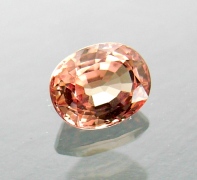 |
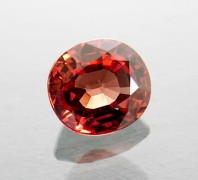
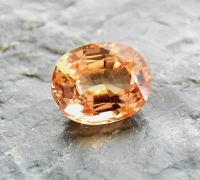
| 1.58ct 7.0x6.3x4.1mm | 1.08ct 6.5x5.1x3.6mm | 1.13ct 6.7x5.4x3.5mm |
| Bekily, Madagascar | ||
マライアとはタンザニアのロードライト・ガーネット産地から時折発見される橙色を帯びた赤い色のガーネットの呼び名です。
スワヒリ語で"屑”や"娼婦”を意味する侮蔑語ですが、1970年代、最大の日本からの買い手には見向きもされず邪魔者として捨てられていました。
ところがこれを試しにカットしたアメリカの買い手がその美しさに気づいたため、逆にロードライトの10倍もの値段に人気が沸騰した、ガーネット界のシンデレラといえる存在です。
主にパイロープとスペッサータインから成る種類ですが、アルマンダインやグロシュラー、ウヴァロヴァイト等をも含む、いわば全てのガーネットの混血児とも言える存在です。
したがって微妙な成分の異なりによって個々の石毎に色合いも様々です。
1990年代末にマダガスカル最南部のベキリーからは色変わりを見せるアレクサンドライト型と共に、橙味を帯びた濃淡様々なピンクのマライア等、多彩な色合いのスペッサータイン系のガーネットが登場しました。
マダガスカル・ベキリー産のマライア・ガーネットは数が少なく1~2カラットと小さい石が大半ですが、高い屈折率による素晴らしい煌きとやや橙を帯びたピンクの色合いは10倍から100倍も高価なパパラチア・サファイアに匹敵する魅力があります。
微量のクロムとヴァナジウムが含まれているために、白熱光下ではアレクサンドライト型の様な鮮明な色変わりこそ見せませんが、濃い赤やピンクの光がふんだんに放射される光の饗宴となります。
Malaia means in Swahili word , first "outcast" and second, "prostitute", nicknamed by local miners for unsalable strange orange and sometimes reddish-orange garnet mined from rhodolite digging deposits. In 1970s, Tanzanian purplish-pink rhodolite was very popular in Japan、but Japanese kept rejecting this strange color garmets. Some Americans and Germans tried to cut the rejected garnets and found them beautiful. Once the real beauty was acknowledged, the top grade malaia garnet's price flew quickly 10 times of rhodolite.
Malaia is a garnet of complicated composition, mainly spessartine with pyrope and minor amount of almandine, grossular and sometimes with uvarovite components. Color varies widely depending compositions.
In late 1990s, from Bekily area, in southern Madagascal, predominantly pink to pinkish orange malaia garnet was discovered, together with color change alexandrite type garnets. Although Bekily malaia is mostly small ( 1 to 2 carat) and not abundant, most of stones are clean and quite brilliant thanks to high refractive index, equivalent to 10 to 100 times expensive papadratch sapphire. Gorgeous brilliance is further prominent under incandescdent light , thanks to minor chrome and vanadium impurity.
| TOP | New Gemstone Gallery | Gemhall |